
How to Detect a Competitor's Weakness From Their Reviews (A Step-by-Step Method)
A repeatable 4-step method to find competitor weakness from reviews: pull the recent window, cluster into themes, filter for recurring and unresolved complaints, then validate the strongest theme against a second data source before you act.
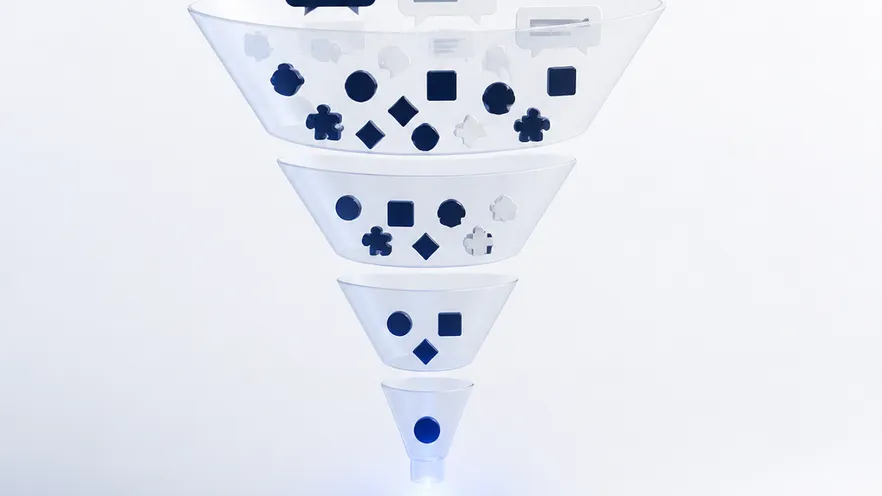
Detecting a competitor weakness from reviews follows a repeatable 4-step method: pull recent reviews, cluster them into themes, filter for recurring and unresolved complaints, then validate the strongest theme against a second data source before acting. Skipping the validation step is the most common mistake. [Omniconvert, 2026]
- A repeatable four-step method: pull the recent window, cluster into themes, filter for recurring and unresolved, then validate.
- Pull 90 to 180 days, not the full history, so the analysis reflects what a prospect sees today.
- Cluster by the attribute mentioned, not by star rating. A 2-star and a 3-star review often name the same theme.
- Skipping validation is the most common mistake, and it is how a campaign gets built on a fixed problem.
- The method works for B2B software too. The theme categories change; the four steps do not.
Last updated: July 2026 · By The Brandfeel Team
To find competitor weakness from reviews is to read a rival's recent customer reviews for recurring, unresolved complaints and turn the strongest theme into a validated marketing angle. Across 13 years and more than 70,000 experiments, Omniconvert has found that the clearest growth signals come from what customers say in their own words, not from a star average [Omniconvert, 2026]. Brandfeel, Omniconvert's sentiment-intelligence layer, aggregates reviews, NPS, and support-ticket themes to surface exactly these signals at scale. This guide gives you the detect-cluster-filter-validate method to do it by hand, and shows where a tool takes over.
What detecting competitor weakness from reviews means
Detecting a competitor weakness from reviews means isolating a specific, recurring, unresolved complaint about a rival that you can answer better, then confirming it is real before you spend on it. The unit of analysis is the theme (a repeated attribute-level problem), not the star rating and not a single angry review.
The reason reviews are such fertile ground is that customers write them unprompted, in their own words, at the moment of highest emotional honesty. A recurring complaint about a competitor is a map to an objection your prospect already feels but has not yet voiced, and answering it in your copy before they raise it is one of the most efficient forms of competitive marketing. Brandfeel is the Competitor Intelligence module inside Nexus by Omniconvert, the AI for eCommerce growth engine, and it exists to read this qualitative signal across every competitor at once. The rest of this article is the manual version of what that module automates.
Why competitor reviews beat surveys for finding weakness
Reviews are messier than surveys but far more truthful. A survey response is filtered through what a customer thinks they should say; a review is written unprompted, right after a good or bad experience, in the words the customer actually uses. That unfiltered language is where a live competitor weakness hides.
Recency is what makes review data actionable rather than historical. Shoppers themselves discount older reviews and weigh recent ones far more heavily when they judge a brand [BrightLocal, 2026], which is exactly why your analysis has to follow the same recency bias: a complaint from 18 months ago may describe a product version the competitor has since fixed. There is also a hard commercial reason to act on a rival's weakness quickly rather than admire it. Winning a competitor's frustrated customer, then keeping them, compounds: a 5% lift in retention can raise profits by 25% to 95% [Bain & Company]. A single review is an anecdote; a theme repeated across dozens of recent reviewers is a signal worth building a test around.
Surveys have their place, but they answer questions you already thought to ask. Reviews surface the objection you did not know existed, which is the whole point of competitive research: you are looking for the gap in a rival's offer that your own product quietly closes. That gap rarely shows up in a survey, because a survey respondent is reacting to your prompt, not volunteering the frustration that made them leave a competitor in the first place. This is the same insight that sits behind Omniconvert's customer value optimization approach: the highest-leverage growth signals are qualitative, specific, and customer-worded, and they reward the team that reads them systematically rather than occasionally.
The 4-step method to find competitor weakness
Whether you do it manually or with a tool, sound competitor review analysis follows the same four steps, and keeping to the order is what stops you from building a campaign on a complaint that is already fixed. Detect the window, cluster the themes, filter for what is live, then validate before you spend.
- Step 1, pull the right review window. Take the most recent 90 to 180 days of reviews rather than the full history, and cover the platforms your buyer actually reads: product review widgets, Google Business, and relevant community or subreddit mentions. Tighten the window further for seasonal categories, where a complaint from last season may not describe the current product at all.
- Step 2, cluster reviews into themes, not star ratings. Group each review by the specific attribute it names (fit, durability, shipping speed, customer service, ingredient concerns) instead of by star count. A 2-star and a 3-star review often point to the same underlying theme, so the theme is the useful unit, not the score. Manual clustering is fine at low volume; tooling earns its cost as the review count climbs.
- Step 3, filter for recurring and unresolved. A theme only qualifies as an opportunity if it recurs across multiple reviewers and still shows up in the most recent 30 to 60 days. A theme that appears once, or that stopped appearing recently, is not a live weakness. Guard against confirmation bias here: do not force a weak signal into the story you were hoping to tell.
- Step 4, validate before you build the campaign. Confirm the strongest surviving theme against a second source, such as search demand for the related solution, your own customer feedback on the same attribute, or a support ticket pattern. Reviews alone are directional, not sufficient, and this step is the one most teams skip.
A worked contrast makes the last step concrete. An unvalidated weakness is "their reviews complain the strap breaks, let us run a durability ad." A validated one adds a second signal: search volume for "durable [category] alternative" is rising and your own support inbox shows shoppers asking whether your strap holds up. The first is a guess dressed as a strategy; the second is a theme you can hand to a copywriter as a testable, single-claim angle. The strongest version of that angle never names the competitor at all. It states the customer's frustration as the reader's own question, then answers it with a specific, provable attribute of your product, which keeps the focus on the prospect's problem instead of inviting a comparison they have to go and research.
How to tell a real weakness from review noise
A real weakness and a piece of review noise can read identically in a single comment. The difference is in the pattern: real weaknesses recur, persist, and tie to a product attribute, while noise is isolated, dated, or operational. The table below is the filter to run each candidate theme through before it earns any budget.
| Trait | Real weakness (act on it) | Review noise (set it aside) |
|---|---|---|
| Recurrence | Repeated across many reviewers | One or two isolated mentions |
| Recency | Still appearing in the last 30 to 60 days | Stopped appearing in recent reviews |
| Attribute type | Ties to a product attribute (fit, durability, ingredients) | A one-off shipping or support hiccup |
| Specificity | Names a concrete, fixable problem | Vague dissatisfaction with no detail |
| Second-source fit | Confirmed by search demand or your own data | Visible in reviews only |
Operational complaints (shipping delays, a slow support reply) are not useless, they simply belong in a different bucket: they inform a customer-experience or service-led message rather than a product-weakness angle. The mistake is treating every low-star review as equally meaningful. Run the five traits above and most candidate themes fall away, which is the point. What survives is a short list of live, product-level weaknesses worth the cost of a test. Note that a theme can also expire between analyses: if newer reviews stop mentioning a complaint, the competitor has probably fixed it, and any angle built on it is now out of date. That is why the filter is a recurring habit, not a one-time audit, and why teams that check on a monthly cadence catch an emerging weakness in its first weeks rather than reading about it a year late.
What a marketing manager should do this week
You can run a first pass in an afternoon. Pick one direct competitor, pull their last quarter of reviews, cluster the complaints, filter for what is still live, and validate your single strongest theme against one second source. That is a complete cycle, and it is enough to brief one ad or one landing-page test.
- Choose one competitor and one review window (start with the last 90 days).
- Cluster complaints by attribute, then keep only themes that recur in the most recent 30 to 60 days.
- Validate the top theme against search demand or your own customer feedback before writing a word of copy.
- Hand the validated theme to your team as one testable, single-claim angle, then set a monthly cadence so you catch the next weakness while it is still live.
Doing this for one competitor is manageable; doing it continuously for every competitor, across every review source, is where it becomes a full-time job. This entire 4-step process runs automatically inside Nexus through Brandfeel and the Competitor Intelligence agent, with no manual review pull required, and because it is built on the same 13 years and 70,000+ experiments as the rest of the platform, you approve what goes live before anything is deployed. If that is the level you want to work at, you can join the Nexus waitlist to see it in practice.
Frequently asked questions
How do I find a competitor's weaknesses from their reviews?
Pull the last 90 to 180 days of reviews, cluster them by theme rather than star rating, filter for complaints that recur and remain unresolved, then validate the top theme against a second data source like search demand or your own customer feedback.
What tools can automate competitor review monitoring?
Dedicated sentiment and review-monitoring tools can automate the pull-and-cluster steps; validation against search demand or internal data still benefits from human judgment.
How many competitor reviews do I need to analyze?
There is no fixed minimum, but a few hundred recent reviews per competitor generally produces enough volume to separate a real theme from noise.
Can this method work for B2B software, not just physical products?
Yes. G2 and Capterra reviews follow the same clustering and validation logic; the theme categories differ (onboarding, support responsiveness, integration gaps) but the method is identical.
What is the biggest mistake brands make with this method?
Skipping validation. Acting on a review theme without confirming it against a second data source risks building a campaign around an issue that is already fixed or was never widespread.
The bottom line
Finding a competitor weakness from reviews is a discipline, not a hunch: detect the recent window, cluster by theme rather than star rating, filter for recurring and unresolved complaints, then validate against a second source before you spend. The teams that win the objection do it fast, while the complaint is still live, and they never skip validation. Brandfeel, Omniconvert's sentiment-intelligence layer, automates the whole loop inside Nexus, so you can act on a validated competitor weakness before your team reads a single review by hand.